

This year has been one of the most eventful in EWC’s history, and we couldn’t have done it without our amazing community of supporters. You’ve helped give apex predators a voice, and that matters. To give you an idea of what you’ve made possible, we’ve rounded up the quietly impactful and the heavily covered moments from the past year. Along with overviews of our advocacy efforts, research and education pieces, you’ll find some team favourites and a message from our executive director.
This year saw the development and release of our Strategic Plan for 2025-2030.
This strategic plan marks a defining moment for the Exposed Wildlife Conservancy. The creation of this document outlines our priorities for the next five years with a focus on five key pillars designed to shift the social and political landscape, from outdated extraction-focused management to modern, science-based, and ethical conservation practices.
As a board, we are committed to turning this vision into action. That’s why each and every project, program and funding proposal sits in alignment with the objectives laid out by the strategic plan. We’re grateful to have you with us as we continue to grow into a national eNGO powerhouse.
In the spirit of expansion, our small but mighty team saw considerable growth this year with the addition of two new members.
Executive Director, Maggie Spizzirri joined the team in April and Sam Foster stepped into the position of Communications and Outreach Director in August. With their arrival has come substantial contribution and increased impact. We eagerly anticipate the coming year and the expanded capacity this growth brings. With a stronger team, we can take on larger advocacy campaigns, broaden our education initiatives and deliver even more meaningful impact for the wildlife and communities we serve.
Back in mid-October we released our 2024-25 Impact Report, detailing the advocacy, research and education work EWC has undertaken to champion the rights of Canada’s apex predators.
In the last two months, we’ve seen apex predators in the news, front and centre. With trophy hunting lobbyists pushing for a reinstated grizzly hunt and Alberta’s provincial government stating it is “on the table”, EWC has been busy, both behind the scenes and in the public eye. Keep reading to see some of the highlights from this year’s projects, as well as updates on our advocacy work over the last few months since the release of our Impact Report.
Throughout 2025, we closely monitored mounting political rhetoric hinting at a potential reopening of the grizzly bear hunt, despite there being no scientific or conservation rationale to support such a move. Grizzly bears remain a threatened species in Alberta, and both provincial and national data show the population is still vulnerable, fragmented, and at risk.
In November, we responded swiftly with a press release titled “Alberta Grizzly Bear Hunt ‘On the Table’”, which drew attention to these escalating policy discussions and their potential to undermine not just grizzly conservation but the broader scientific integrity of Alberta’s wildlife management system. (Read the full release)
We emphasized that grizzlies continue to face pressures from habitat loss, road mortality, poaching, and inadequate corridor protections, and that any move toward a hunt is politically driven, not science-based.
In response to this alarming trend, we’ve formed a new Grizzly Bear Coalition, bringing together a number of conservation organizations across Alberta and British Columbia to develop and launch a comprehensive strategy to keep the grizzly bear hunt closed. This strategy will be launched in early 2026. This initiative will be a core priority in 2026, as we work to ensure that grizzly bears remain protected, and that wildlife management decisions are rooted in data, ethics, and the public trust.
One of the most overlooked yet urgent animal welfare issues in Canada is the continued use of inhumane trapping devices, enabled in part by outdated regulations and weak enforcement.
While Canada is a signatory to the Agreement on International Humane Trapping Standards (AIHTS), a treaty that governs which traps can be used in fur-trade countries, a major loophole exists:
The agreement allows only Canada to keep using traps that fail to meet the standards, as long as they claim they are "working toward compliance."
In practice, this means many inhumane killing and restraining traps remain legal, and new, truly humane alternatives are not being developed or implemented in Canada, even as other countries advance modern, animal-welfare-forward technologies.
This year, our Executive Director met with Senator Sorenson to elevate this issue on the federal radar. Our 2025 advocacy efforts included background briefings, partner outreach, and foundational work to build a national trapping reform campaign.
Moving forwards this will become a major priority, especially as we reach out to:
This is a long-term battle, but a critical one. We envision a future where Canada becomes a leader, not a laggard, in wildlife welfare and humane technology development. That starts with closing the loopholes and telling the truth about what’s still happening on our landscapes.
This year, EWC strengthened its work on cougar stewardship, pushing back against regulatory rollbacks and helping Albertans understand the implications of these decisions on our communities and shared ecosystems.
Alberta’s provincial hunting regulations have shifted dramatically. Female quotas were more than doubled, and new areas were opened to hunters, including zones bordering protected lands. The use of off-leash hounds was expanded, and mandatory harvest reporting for cougars and several other species was removed. These decisions erode transparency and move Alberta further away from responsible, sustainable management. Female cougars play a central role in population stability, and the government’s own modelling shows many regions hovering near minimum viable thresholds. This increasing pressure on breeding females undermines long-term recovery of this important keystone species.
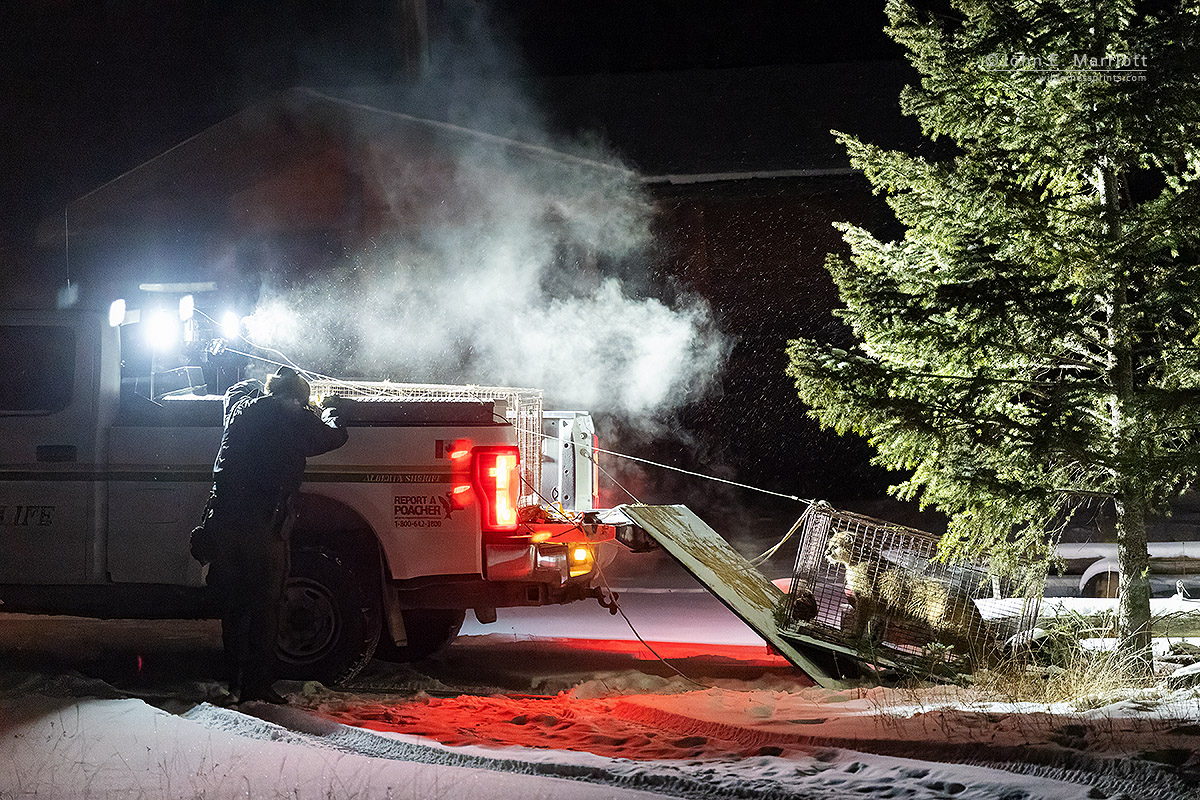
In February, the consequences of weakened regulations came into painfully sharp focus. A mother cougar was killed by a trophy hunter, leaving two orphaned kittens, just outside a protected area near Canmore and discovered by EWC co-founder and Ambassador, John E. Marriott. The kittens, far too young to fend for themselves, were later captured and transferred to a sanctuary in Quebec. The incident drew national attention and underscored the human decisions behind preventable losses. It also highlighted the need for stronger safeguards around known denning periods and family groups.
In response, EWC and Alberta Wilderness Association released a joint statement calling for the reversal of harmful changes made by the Minister. We emphasized that decisions of this scale should be science-based, require transparent processes, and meaningful public consultation. Pressure from trophy hunting lobbyists and the favouring of special interests cannot shape wildlife policy. Albertans deserve better.
Our Community Trail Camera Program continues to successfully support our work in cougar conservation through the documentation of behaviour, distribution, and family dynamics.
EWC’s focus remains on shifting the narrative around cougars to one grounded in science and ecological data. Through advocacy, media engagement, and public education, we continue to foster understanding, alleviate fear, and promote policies that advance coexistence for humans and wildlife.
We wrap up the year with a small win from the Wildlife Management Units of 408 and 410 in the Bow Valley, AB. Thanks to continued advocacy and public support, cougar hunting quotas have been reduced back to one male and one female.
This victory is representative of the power of using our voices to speak up for apex predators. Given that quotas are often exceeded in Alberta’s WMU’s, there is still much work to do, but this small win is a win none-the-less. Thank you to everyone that spoke up and let’s keep pushing!
Our Community Trail Camera Project continues to grow, helping rural communities better understand and coexist with local wildlife. By tracking wildlife and human-use trends, we’re building awareness of what residents and recreationists can expect throughout the seasons—on local trails and in their own backyards.
The start of 2025 marked the completion of our two-year installation in the Waiparous and Back 40 areas; an exciting milestone! In the MD of Bighorn (including Lac Des Arcs, Dead Man’s Flats, Exshaw, and Harvie Heights), the project has been extended by one year, bringing it to a full two-year deployment by next summer. These extended timeframes allow us to monitor each season twice, providing more reliable insights into wildlife and human activity patterns. Thank you to the MD and our dedicated volunteers for their ongoing support!
We’ve also begun the formal review of our growing catalogue of footage, starting with the Village of Waiparous and Back 40 areas. Over the coming months, our volunteer team will spend countless hours (thank you!) logging all the valuable information they can from each frame. Once the review is complete, we’ll compile and share a community report highlighting key findings and offer guidance on coexisting with our wild neighbours.
Thank you to everyone involved for helping make this project such a success; we’re excited to see what the next year will reveal!
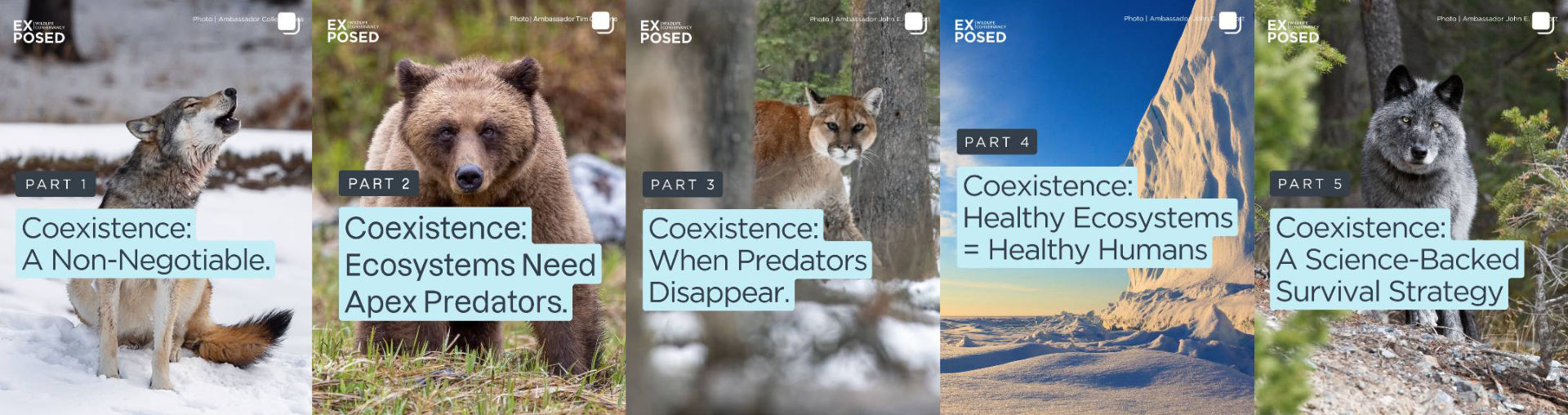
In a five-part series on coexistence, we discuss coexistence as a non-negotiable and a necessity for human survival. We take a look at the ways our food systems, water quality, disease regulation, climate resilience, and even mental health are intimately tied to the integrity of ecosystems, and at the heart of those ecosystems are apex predators. We discover the dangers of predators disappearing from our landscapes and the ways in which healthy humans depend on healthy ecosystems. The series culminates with the importance of protecting our apex predators as a science-backed survival strategy.
The health of our apex predator populations, our ecosystems and climate resiliency are inextricably woven together. In this three part series, we addressed the importance of responsible stewardship as climate action and the critical role apex predators play in climate resilience.
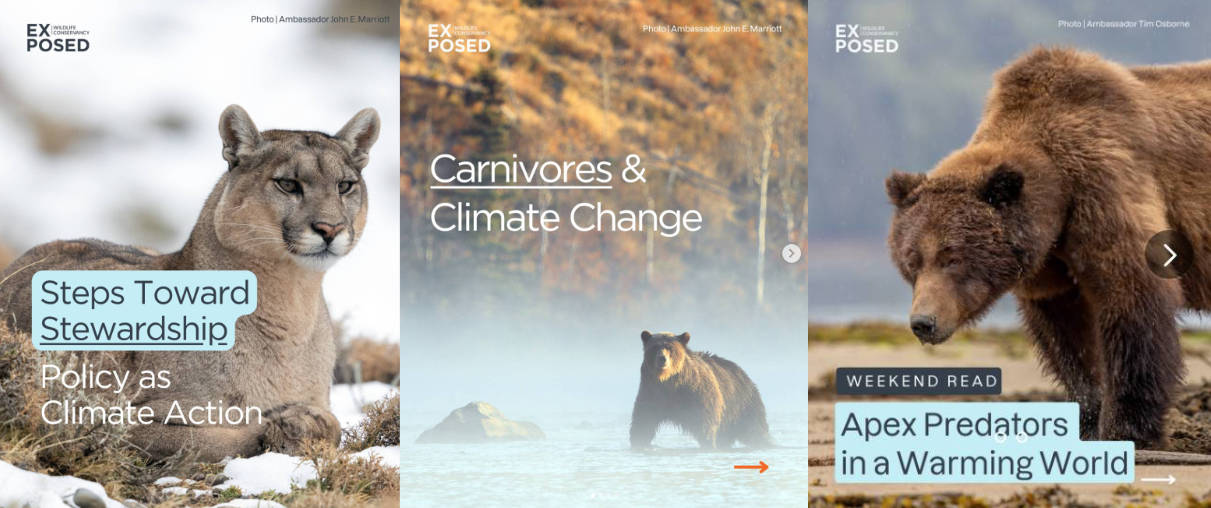
As governments double down on extractive industries in the name of bolstering the Canadian economy, we pause to consider another path. We deep dive into the benefits of ecotourism, how predators play a role in the economy and the success stories making headlines Canada and further afield. In this three part series on ecotourism, we demonstrate the value of a living animal and why trophy hunting is not the economic sweetheart that the lobbyists would have us believe.

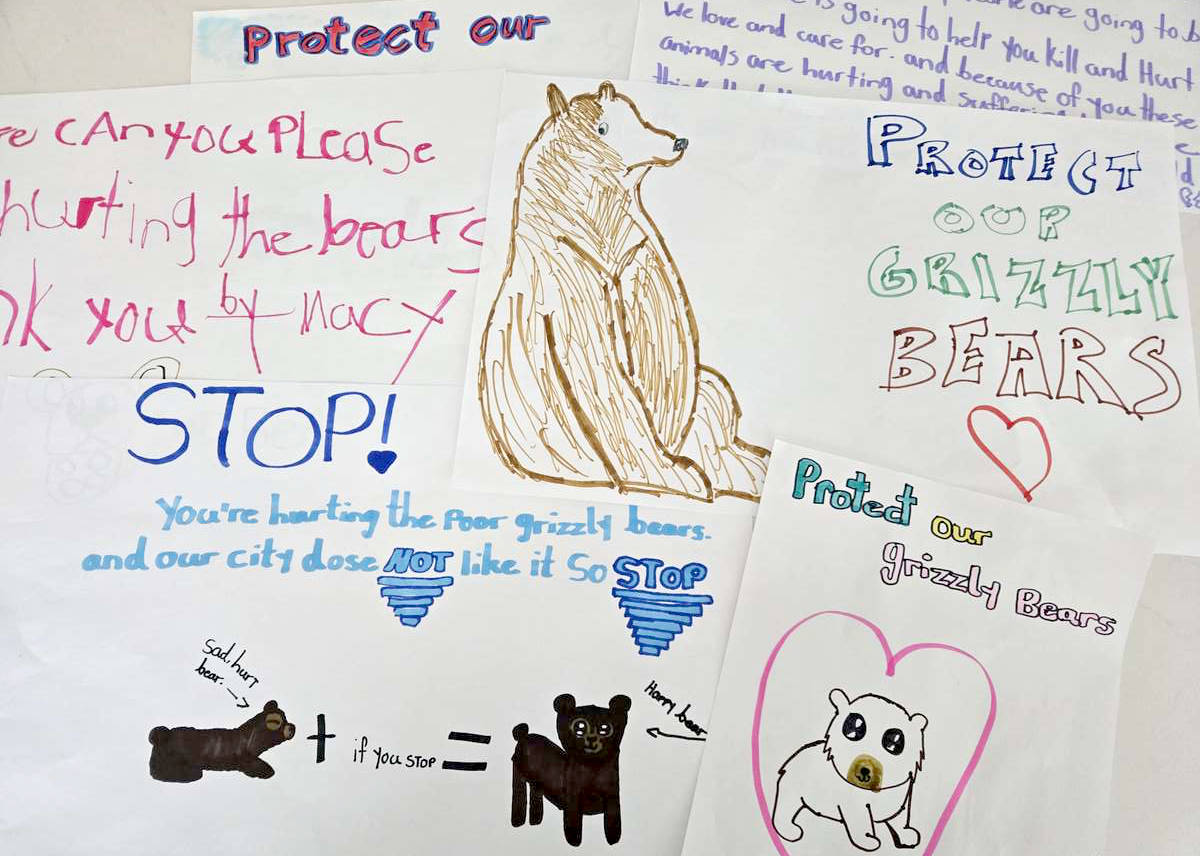
EWC visited three classrooms in the Okanagan, BC, this fall and spoke with 97 elementary students about co-existence and apex predators. We learned about the role of apex predators in our ecosystems, why wildlife finds itself in our communities, and the importance of wildlife-resistant garbage bins and managing attractants. The timing was serendipitous as a grizzly bear had been spotted roaming the neighbourhood of one elementary school that borders a nature conservancy.
Through play and story telling, we discovered the critical nature of stories and narratives on our perception of apex predators. The topic of hunting was raised by one of the older students having bear hunting in Alberta on the news with their parents. Their class initiated a project to create posters showing their opposition to the hunting of bears. The questions raised and the enthusiasm shown for protecting apex predators by these young learners was both astounding and heartwarming.
If you’d like to send us drawings, art and posters in support of apex predators from your young ones, we’d love to see and share them! Please email Sam at sfoster@exposedwc.org
151 Posts on Social Media
24 Newsletters
8 Press Releases
12 Longform Articles
1 Impact Report
Content views: 1.3M
Interactions: 50.9K
New Followers: 1.5K
Content views: 574.8K
Reach: 116.1K
Interactions: 21.8K
New Followers: 1.6K
We’ll be publishing a detailed, public-facing report that explores cougar population status, current threats, hunting policies, and recommendations for provincial management reform. This report will serve as both an advocacy tool and a knowledge hub for wildlife professionals, journalists, educators, and communities.
As part of our education and outreach strategy, we’ll be conducting a province-wide survey to understand how Albertans and British Columbians feel about apex predators, including cougars, grizzlies, and wolves. The goal? To better tailor our communications, inform policymakers, and create education materials that meet people where they’re at.
After the success of our classroom visits, we’ll be expanding our accessible and inclusive, youth focused education programs across both provinces. We’ve already started laying the groundwork and we’re beginning to fundraise for this ambitious initiative. It’s with your kindness and generosity that we can inspire the next generations and change the story for apex predators in Canada.
In response to the targeted attacks on grizzly bears this year from lobbyists, EWC is working with some amazing partners to launch an NPO coalition. Our mission is to advocate for the grizzly bear hunts across Alberta and British Columbia to remain closed and to ensure grizzly bear recovery plans are reviewed with transparency and scientific data.
We will release a report on our Village of Waiparous project. We’ll complete Year 2 of our MD of Bighorn deployment, and continue reviewing footage to support community education. We’re also exploring a promising new northern Alberta partnership, which would mark our first trail camera expansion into the region.
2026 holds an awful lot of potential for some really impactful wins. In the new year, we will begin early research into the potential establishment of a grizzly bear sanctuary. This feasibility study will assess ecological suitability, land-use considerations, partnerships, community impact and economic support, and long-term conservation benefits for vulnerable grizzly populations.
As well as working with the Coalition pushing back against efforts to reopen the grizzly bear hunt and ensure wildlife policy remains rooted in science and public trust. We will also advance our national trapping reform initiative focused on strengthening Canada’s obligations under AIHTS and improving humane standards.
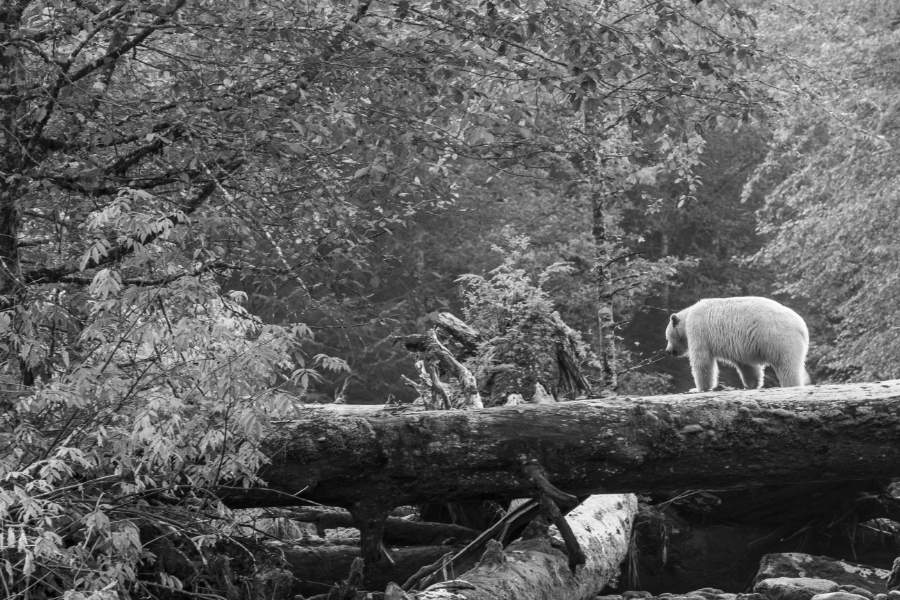
One is my favourite 'photo that tells a story' (albeit a horrible story)...the other is my favourite 'artsy' photo of the year.
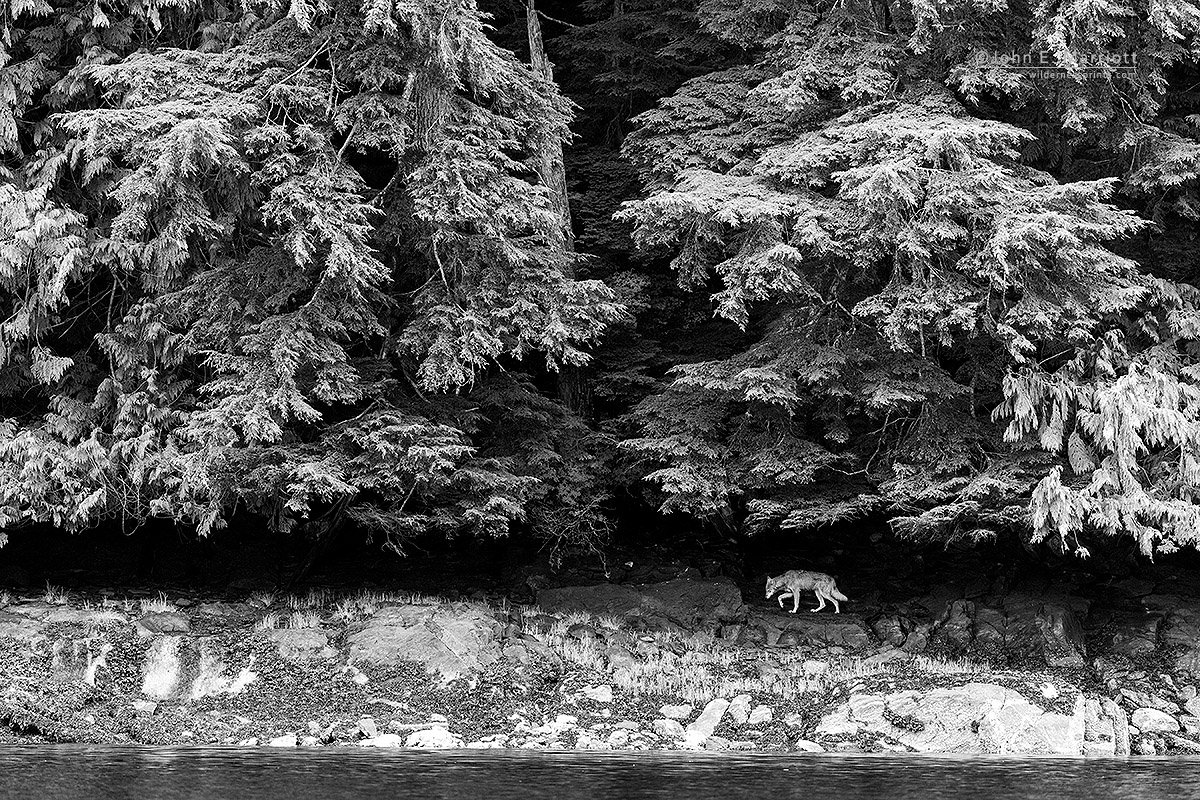
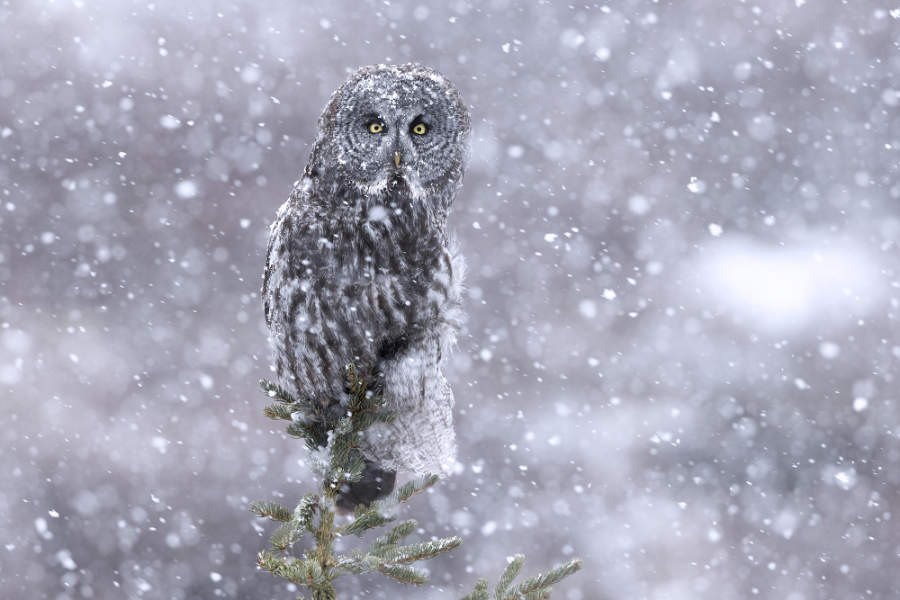
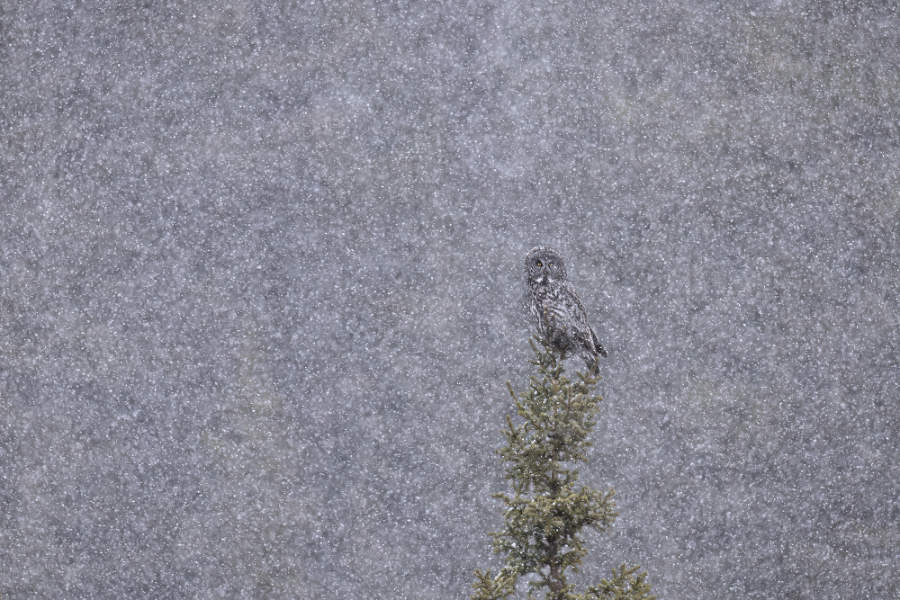
These are not from this year, but from my first trip with John, 14 years ago. It's what got me hooked on photography and eventually led me to Exposed.
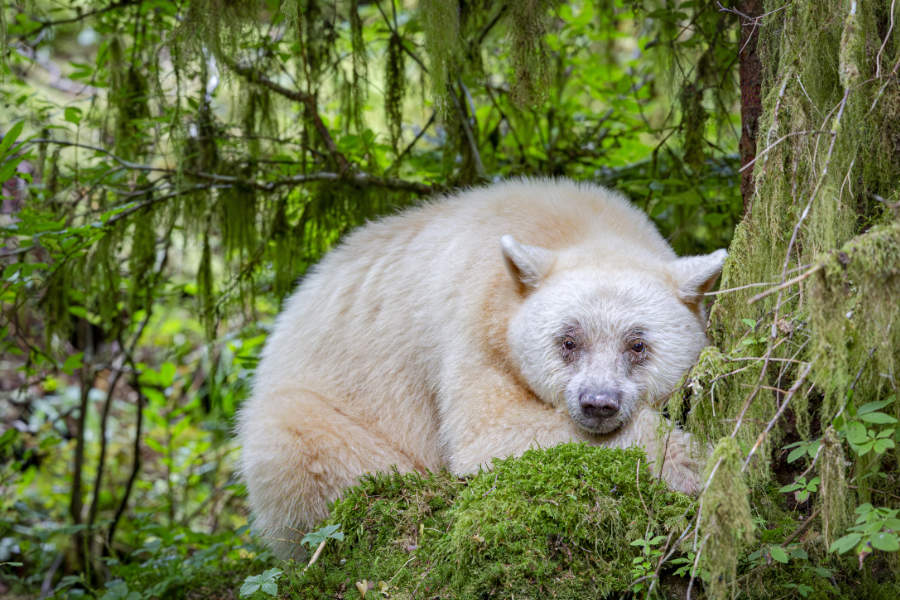

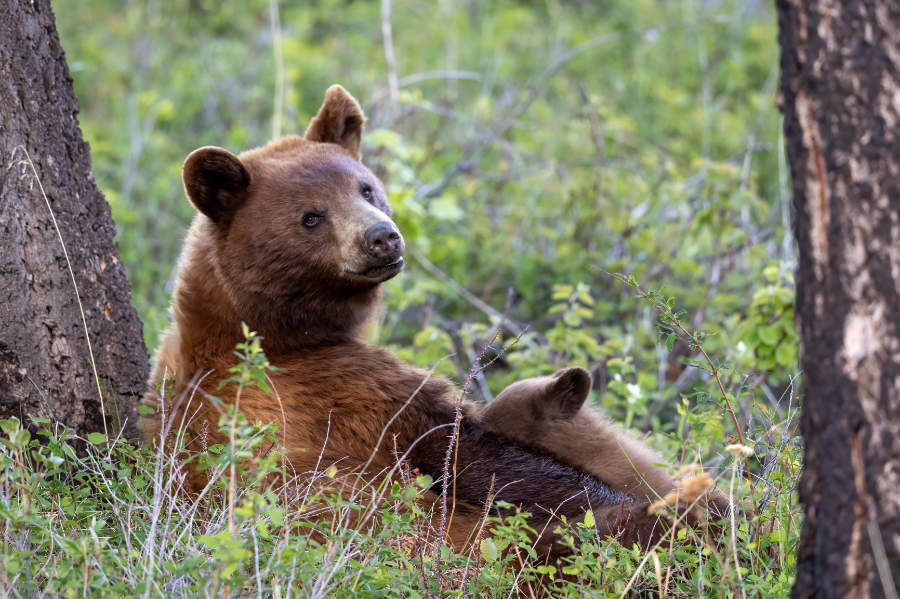
This photo was captured in the Spring of 2025 in Waterton Lakes National Park. The young cub had just climbed down from a tree and almost immediately began nursing from his mother who had been sitting at the foot of the tree. What I love about the photo isn't anything technical, it just takes me back to a wonderful moment of being present to see such an intimate interaction between mother and child.

This book isn’t directly about apex predators, but it has stayed with me in a way that deeply connects to the work we do. Ishmael is a stark, hopeful reminder of where we’ve come from and how profoundly our lives are intertwined with the natural world. It asks us to look honestly at the stories we’ve built our society around, and to consider how those stories have shaped our relationships with land, wildlife, and each other. For me, it’s a beautiful reminder that humans, nature, and wildlife are not separate. We rely on one another, and none of us can survive without the balance created by the others. As Jim Britell of Whole Earth Review states, “From now on I will divide the books I have read into two categories—the ones I read before Ishmael and those read after.
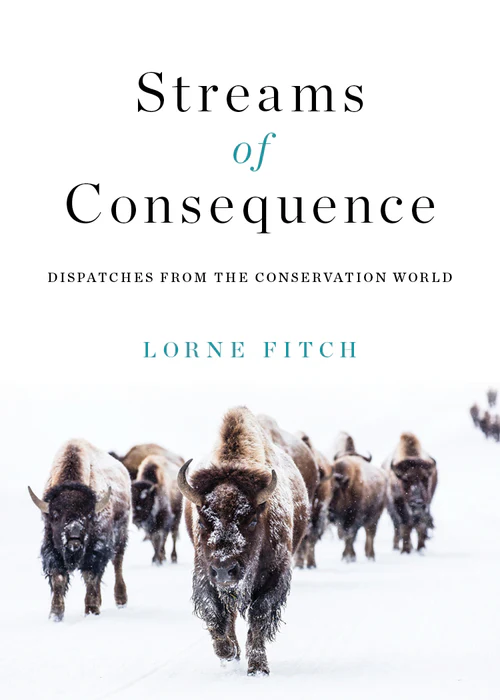
When I picked up Streams of Consequence by Lorne Fitch, I did not expect it to become the book I'd share with others to explain better than I can, "This is why we should care more about the land we live on—its value goes far beyond the dollars we can extract from it."
It is more than just a book about conservation in Alberta; it is a model for a deeper way of thinking. The collection of essays are informative, thought provoking, and occasionally humorous—making them extremely approachable. Fitch excels at distilling Alberta's conservation landscape, highlighting key challenges and their root causes. Beyond specific issues, he shows why caring for the environment isn't niche—it's at the core of the world we live in.
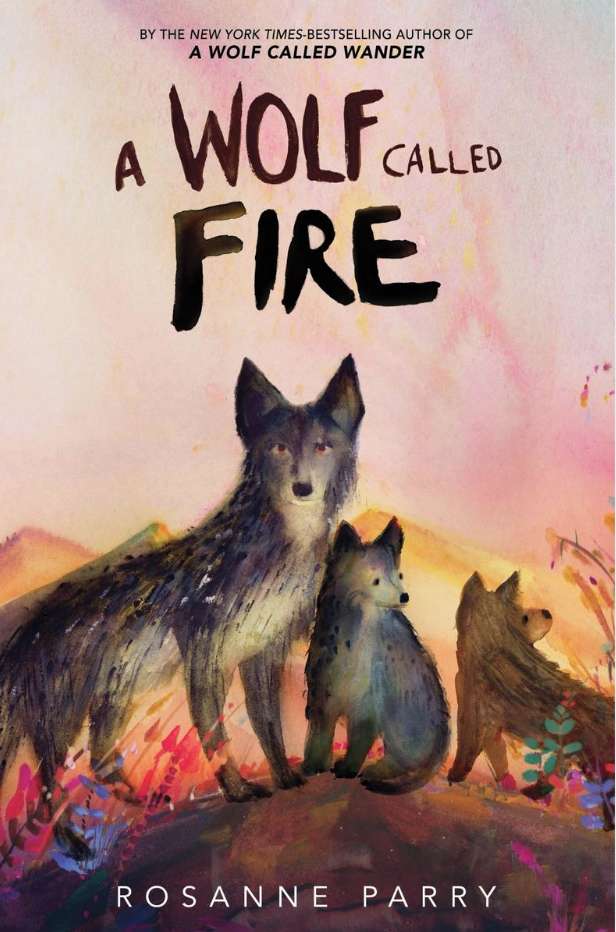
I’m going to take advantage of my editorial privileges and present you with two ‘favourites’ from my year. My first is a book released this year. Every time I read this with kids, it makes my heart so happy to see the way they light up. ‘A Wolf Called Fire’ was inspired by Wolf 8, a real Yellowstone wolf who was the smallest of his pack who grew up to be an amazing leader. He fought many rivals but killed none, and became the patriarch of the largest wolf pack in Yellowstone. I love the message that collaboration is the key to success. I have a feeling this book will remain a firm favourite with many students for years to come.
For my sneaky second contribution… I joined the EWC team this summer and right from the off, I witnessed the passion and dedication of a small but mighty team. Through countless posts on social media, op-eds, articles, press releases, statements and newsletters, I’ve been lucky enough to write on behalf of the incredible apex predators we advocate for, but also this community. I believe that our time is the most valuable thing we have in this world, and how we spend it truly matters. It’s a privilege to spend mine giving a voice to those that can’t speak for themselves and to amplify the values of wildlife advocates across Canada. This opportunity has been my favourite.
As we close out 2025, I want to extend my deepest gratitude for everything you have helped us accomplish this year. None of our advocacy, research, coalition-building, or conservation wins would have been possible without your unwavering support.
Every petition you’ve shared, every donation you’ve made, every conversation you’ve sparked, and every message of encouragement has strengthened our voice and our ability to push for ethical, science-based wildlife management across Western Canada.
This year, together, we challenged harmful policy decisions, stood up for grizzlies and cougars, advanced national trapping reform, expanded coexistence education, and laid the foundation for transformative work ahead. These successes belong to all of us.
As we look toward 2026, the team and I are energized and ready to dig into the critical work ahead, from launching the Grizzly Bear Coalition and publishing our Cougar Conservation Report, to advocating nationally for humane trapping reform, exploring the feasibility of a grizzly sanctuary, and deepening public understanding of apex predators through our provincial survey.
Thank you for standing with us. Thank you for believing that wildlife deserve a voice. And thank you for helping us build a future where Canada’s apex predators are respected, protected, and valued.
With gratitude and determination,
Maggie Spizzirri
