


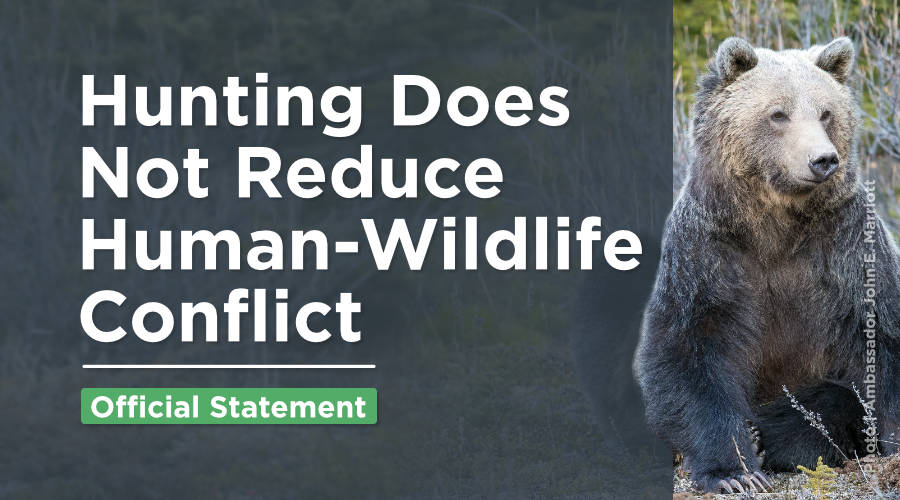
Amiskwaciwâskahikan/Edmonton - Exposed Wildlife Conservancy, in collaboration with the Grizzly Bear Foundation and Alberta Wilderness Association, are once again calling on the Government of Alberta to prioritize evidence-based, non-lethal wildlife management strategies and maintain the current closure of the provincial grizzly bear hunt.
As discussions surrounding Alberta’s grizzly bears continue, it is critical that wildlife policy decisions affecting this threatened species be guided by credible scientific evidence, measurable outcomes, and long-term ecological responsibility.
Fear-based narratives and reactive policy responses do not have a place in responsible wildlife management. Many hunters, educators, scientists, tourism operators, Indigenous leaders, and rural communities agree that killing a threatened species under the premise of reducing human-bear conflict is not a credible long-term approach.1
There remains no current province-wide population data and no established scientific consensus demonstrating that recreational hunting reduces the frequency or severity of human-wildlife conflict involving grizzly bears. In the absence of both data and supporting evidence, there is no scientific basis for reinstating the hunt of a threatened species.
It has been established that conflict is not primarily driven by the mere presence or number of grizzly bears on the landscape.2 Alberta’s own scientific guidance and Grizzly Bear Recovery Plan identify the root causes of most conflict as human behaviour and inadequate attractant management. Unsecured garbage, livestock attractants, agricultural feed, fruit trees, and improper food storage continue to be among the leading contributors to preventable wildlife interactions across the province.
Addressing these root causes through proactive coexistence strategies remains the most effective and responsible path forward. Proven non-lethal measures already exist and have demonstrated success in reducing conflict and improving community safety in jurisdictions across North America and internationally.3,4,5 These include:
These approaches not only reduce preventable conflict but also reduce unnecessary wildlife deaths while improving public safety outcomes for rural communities, recreationists, and remote industry workers alike.
Municipal leaders and rural communities across Alberta have repeatedly called for increased support for coexistence measures and long-term conflict prevention funding. The 2024 request from the Rural Municipalities of Alberta for stable coexistence funding reflected growing recognition that prevention-based strategies are more effective, economically responsible, and publicly supported than reactive lethal responses.
Importantly, the Government of Alberta’s own 2020 Grizzly Bear Recovery Plan already prioritizes many of these same approaches. Yet key recommendations surrounding coexistence infrastructure, monitoring, education, and conflict prevention remain underfunded or are yet to be implemented six years later.
Grizzly bears are already extirpated (locally extinct) in the prairie regions of Alberta. Reintroducing a recreational hunt before fully implementing the province’s own recovery framework would fail to address the root causes of conflict while introducing additional mortality to a species that remains designated as Threatened under Alberta’s Wildlife Act.
Public safety and wildlife conservation are not opposing goals. Effective coexistence strategies support both.
Public opinion6 research further reinforces this approach. Provincial7 and national polling consistently demonstrates strong support for science-based, non-lethal wildlife management and the continued protection of grizzly bears. Research commissioned by Exposed Wildlife Conservancy found that a significant majority of Albertans support maintaining protections for grizzly bears and favour coexistence-focused management strategies over trophy hunting and reactive lethal approaches.
Public confidence in wildlife management depends on policies that are guided by credible evidence and reflect the values of Alberta’s public majority.
Communities across North America have demonstrated that long-term reductions in conflict are best achieved through prevention-focused programs that reduce attractants, improve public awareness, and support practical coexistence measures. Alberta has the opportunity to demonstrate leadership by strengthening these efforts rather than reverting to lethal approaches that remain unsupported by current evidence.
Responsible wildlife governance requires measured decision-making grounded in science, transparency, and long-term stewardship. Policies affecting a threatened species should not be shaped by isolated incidents or framed in ways that suggest recreational hunting is a public safety solution when evidence does not support that conclusion.
Exposed Wildlife Conservancy, the Grizzly Bear Foundation, and Alberta Wilderness Association continue to urge the Government of Alberta to:
Preventing conflict before it occurs is more effective and consistent with Alberta’s own scientific guidance than introducing additional mortality to a threatened species.
Protecting communities and protecting critical keystone species that support Alberta’s ecosystems are goals that can, and must, be achieved together.
You can let the government of Alberta know that you support the maintained closure of the grizzly bear hunt.
As part of this three-part series, members of the public are encouraged to send Letter 2: Alberta Must Prioritize Non-Lethal Wildlife Management Practices, calling on the Government to implement its recovery plan and maintain the current hunt closure.
Learn more about the importance of maintaining the closure of Alberta’s grizzly hunt and sign the letters:
→ Read Our Opening Statement and Formal Letter to the Government
By signing in support of grizzly bear recovery, non-lethal conflict management tools, and recognition of the sustained economic value of living wildlife, the public can make a meaningful difference to the future of Alberta’s threatened grizzly bears.
