


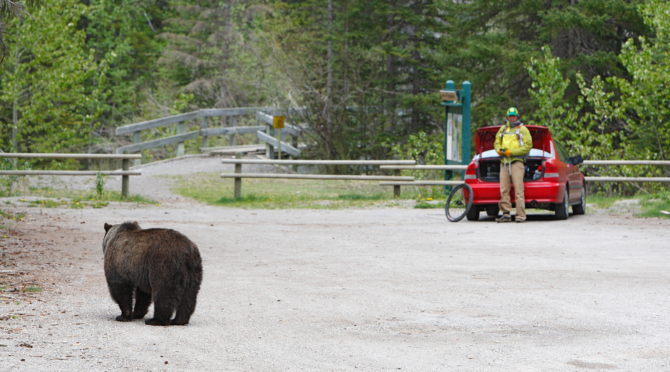
Local governments make decisions every day that can shape how people experience wildlife in their communities.
With B.C.’s 2026 local government elections approaching on October 17, now is a good time to ask candidates where they stand.
While wildlife management is largely a provincial responsibility, municipalities and regional districts have an important role to play in preventing conflict before it happens. Decisions about waste and attractant management, development, parks and recreation, public education, community planning, emergency preparedness and local bylaws can all influence whether wildlife encounters become problems.
Local governments have access to meaningful levers within their jurisdiction and should use them proactively, while working with the province and Indigenous governments where responsibilities overlap.
We’re encouraging you to ask candidates this question: What will you do to help your community coexist with wildlife?
Across B.C., communities are sharing their neighbourhoods, farms, roads, trails and backcountry with bears, cougars, wolves and other wildlife.
Most encounters do not need to end in the removal or killing of an animal. Many conflicts can be prevented when communities have the right systems in place before a problem develops.
That means thinking beyond what happens after an animal is already in trouble and asking practical questions about community safety, planning and good governance.
Are garbage and other attractants being managed effectively? Are new developments being planned with wildlife movement and attractants in mind? Are residents given the information they need to live safely alongside wildlife? Do communities have clear processes for responding to recurring conflict? And are local governments working with residents, Indigenous communities, businesses and provincial agencies to identify problems early?
Local action matters because coexistence is a community responsibility, and although living alongside wildlife will not always be easy, the goal is to build communities where people have the knowledge, infrastructure, policies and support they need to live safely alongside wildlife in the first place
In a recent public perception survey of 1,506 people across BC and Alberta, the majority of respondents showed support for coexistence through non-lethal and transparent management.
Across species, over 72% believe humans and apex predators can successfully coexist, 91% believe most human-carnivore conflicts can be prevented, and 79% would change their behaviour with clear guidance, while 84% actively seek information about living safely alongside wildlife.
There is a desire and capacity to coexist, yet trust in government management of apex predators is not strong, with many feeling current management is too reactive. Respondents frequently criticize governments and conservation responses as overly lethal, delayed, or not sufficiently focused on prevention.
Government candidates have clear opportunities, backed by public support, to deliver on proven, preventative coexistence measures.
Candidates can learn more via EWC’s report on the public perception survey, Living With the Wild
You can get the full list of candidates from Elections BC.
You can use the questions below when attending an all-candidates meeting, contacting candidates directly, or talking with your neighbours about the issues that matter in your community.
You can also send the questions directly to your candidates and ask them to share their answers publicly.
Will you support proactive non-lethal measures that reduce wildlife attractants and prevent avoidable conflicts in your community?
This could include stronger wildlife-resistant waste requirements, attractant management, education for residents and businesses, and targeted action in areas where conflicts are recurring.
Will you support reviewing and strengthening local bylaws related to garbage, compost, fruit trees, livestock feed and other wildlife attractants where needed?
We want communities to have practical, enforceable rules that reduce the likelihood of wildlife becoming food-conditioned or habituated.
How will you ensure wildlife and wildlife movement are considered when approving new development, infrastructure, recreation areas and other changes to the landscape?
Planning decisions made today can influence wildlife conflict for decades.
Will you support accessible, practical education and resources that help residents understand how to prevent encounters and respond safely when wildlife is present?
People need more than warnings after an animal has already appeared in their neighbourhood. They need clear information about what they can do before, during and after an encounter.
What will you do to ensure wildlife-related bylaws are actually enforced, particularly in areas experiencing repeated conflict?
Education and prevention are important, but they work best when communities also have the capacity to enforce the rules that protect both people and wildlife.
Will you commit to working with the provincial government, Indigenous communities and neighbouring local governments to improve wildlife conflict prevention and response?
Wildlife does not stop at municipal boundaries. Effective coexistence requires coordination across jurisdictions.
Will you support collecting and sharing information about wildlife conflict so that local decisions can be based on evidence rather than isolated incidents or public pressure?
Good decisions depend on understanding where conflicts are happening, why they are happening and which interventions are actually working.
What would a community that successfully coexists with wildlife look like, and what would you do during your term to move your community closer to that goal?
We want to know whether candidates see coexistence as a long-term community responsibility, rather than simply a response to the next wildlife emergency.
We believe effective coexistence starts with prevention. That means local governments should have the tools, policies, partnerships and resources needed to address the conditions that lead to conflict before the situation escalates.
Candidates do not need to have every answer today, but we want to see a willingness to:
Prevent problems before they become conflicts.
Plan for wildlife as communities grow and change.
Prepare residents and communities for living with wildlife.
Enforce the rules that reduce avoidable conflict.
Collaborate across governments, communities and organizations.
Evaluate whether coexistence measures are actually working.
