


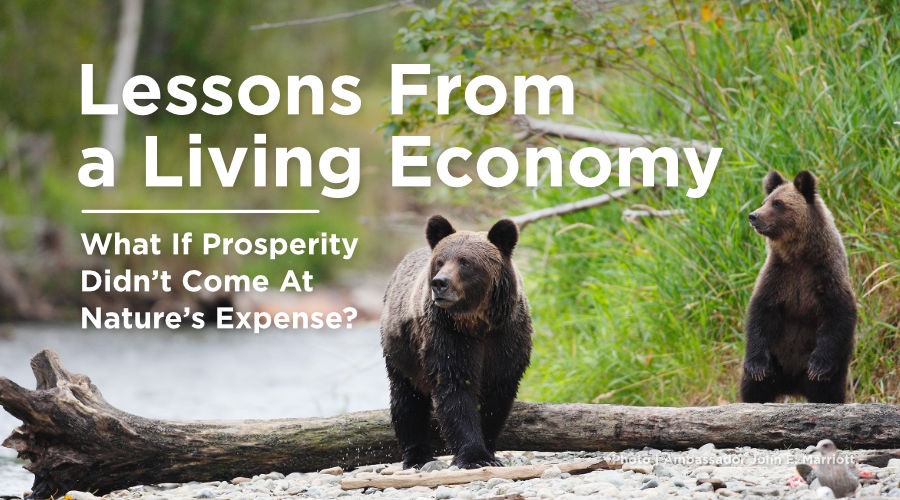
What comes to mind when you hear the words Costa Rica?
Perhaps it’s coffee, toucans, jungles, or beaches. For me, it’s Pura Vida. Known for its intact ecosystems and remarkable biodiversity, this small Central American nation holds nearly six percent of the world’s biodiversity. Yet it isn’t the two-toed sloths that fascinate me most, but the country’s history, its leadership, and its unwavering commitment to Pura Vida. Pure Life.
Canada and Costa Rica share a wealth of natural resources. Both are comparatively rich in forests, minerals, and freshwater. Yet the paths these two nations have taken toward economic stability could not be more different.
So how did Costa Rica become a global model for sustainability, education, investment, environmental protection, and ecotourism, while Canadian provinces like Alberta face some of the highest rates of biodiversity loss along with growing gaps in access to healthcare and education, all while remaining tied to an unstable economy built on extraction?
What was once a struggling agricultural nation is now a world leader in sustainable development. Costa Rica generates 98 percent of its energy from renewable sources and protects 25 percent of its land. That’s a lot considering the country's diminutive size.
After its civil war ended in the late 1940s, Costa Rica made a radical choice. The country abolished its army and redirected military funding toward education, public health, and environmental protection. That decision became the foundation of its modern identity as a nation that invests in its people and ecosystems.
Today, that investment shows in real terms: Costa Rica’s literacy rate sits at nearly 98 percent, its life expectancy rivals that of Canada, and poverty has dropped steadily since the 1980s as ecotourism and conservation-based industries have expanded.
Since the 1940s, conservation has been a cornerstone of Costa Rica’s economy. Roughly a quarter of its land is protected as parks and reserves, and governance focuses on human and ecological well-being. But they didn't rest on their laurels or begin extraction of their resources; instead, in 2019, the country announced plans to reach carbon neutrality by 2050 with its ambitious National Decarbonization Plan.
This global success story hasn’t been without its challenges, and it’s the pivotal moments in Costa Rica’s policymaking that define their strong leadership and have allowed them to progress as a nation, garnering respect and maintaining positive diplomatic relations. In the 1980s, nearly half the country’s forests were lost to agriculture and logging.
Rather than yield to industry pressure, Costa Rica focused on reforestation and introduced the Payment for Environmental Services scheme (PES), primarily funded by a tax on fossil fuels, which pays landowners to protect watersheds, restore forests, and integrate trees into farming. Today, roughly sixty percent of Costa Rica is forested, with ambitions (and plans in place) to increase this number in the future.
Diego Vincenzi, current chief of staff for the Minister of Environment and Energy in Costa Rica, told Monga Bay, “Costa Rica’s environmental maturity has taught us that all ecosystems are interconnected and cyclical, and we must create the right conditions for both conservation and production. Healthy land use and healthy marine use are in the best interest of us all; a resilient and productive environment benefits everyone.”
Interestingly, alongside citizens, it’s ecotourism that plays an important role in conservation, contributing roughly 8 percent of Costa Rica’s GDP and directly employing more than 200,000 people, much of it in small, community-owned businesses that rely on healthy ecosystems. Roughly three million people visit Costa Rica each year, according to their tourism board, and nearly two-thirds of those are showing up for the famed biodiversity and wildlife experiences, whilst helping the country reach their lofty goal of carbon neutrality.
As the pioneers of nature-based tourism, the country has used it to fund conservation efforts and support local communities, with initiatives like its government-run National Conservation Area System and PESP. By the early 1990s, Costa Rica had become the poster child for ecotourism, and its lush, protected landscapes are still one of the major draws for tourists all over the world, including me. I still want to see the sloth. It is a model that demonstrates how protecting nature is not an economic burden but an investment that continues to pay dividends.
Adding to the growing list of sound investments, in 2018, Costa Rica joined the Wellbeing Economy Alliance, a worldwide collaboration working toward an economy that prioritizes human and ecological well-being. It's moves like this that foster support from communities and keep citizens on side when challenges inevitably occur.
The key to Costa Rica’s progress is not luck or geography but design. It is multi-layered and intentional, but most importantly, it is replicable. It requires vision, accountability, and the political courage to prioritize long-term well-being over short-term profit, but it is achievable.
Perhaps there is an opportunity for Canada’s ecologically rich provinces to take a page from Costa Rica’s Pura Vida playbook and build a stable economy that sustains both people and planet.
Ecotourism offers a proven way forward. It allows nations to generate income through preservation rather than depletion, creating renewable economic systems that strengthen both communities and ecosystems. Canada’s tourism sector already contributes approximately $50.8 billion to the national economy and accounts for about 1.8 percent of GDP (2024). Within that, the Indigenous tourism sector alone generated an estimated $3.7 billion in revenue, according to the Conference Board of Canada.
Redirecting even a fraction of the billions in annual subsidies currently supporting resource extraction toward ecotourism infrastructure, training, and marketing could transform rural economies while protecting biodiversity.
Across western Canada, Indigenous and community-led ventures are already proving that this model works, replacing extractive industries with regenerative, values-based tourism that keeps revenue local and ecosystems intact.
The opportunity is not just international. A 2024 national survey found that 82 percent of Canadians are interested in ecotourism experiences, meaning the potential for reinvestment of domestic spending is as significant as that from foreign visitors.
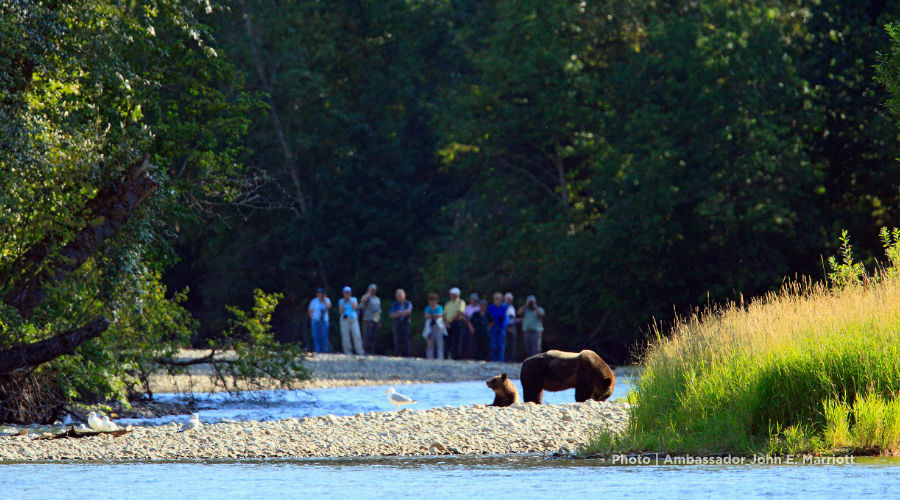
The economic case for ecotourism is far from theoretical. In the Great Bear Rainforest, one of the world’s largest temperate rainforests, a study by the Center for Responsible Travel (CREST) and Stanford University compared bear-viewing tourism with trophy hunting using national GDP standards.
In 2012, bear-viewing tours generated $15.1 million in visitor spending, while guided and resident hunting combined brought in just $1.2 million. Bear viewing contributed $7.3 million to GDP and supported 510 jobs (that’s 133 full-time positions), compared to hunting’s 11 jobs and $660,000 GDP contribution.
Ecotourism does not just replace lost income; it creates new, long-term opportunities. The same pattern holds across British Columbia, where, according to Destination BC, nature-based tourism now contributes more than $7 billion each year, supporting tens of thousands of jobs and small businesses across the province.
In Alberta, the potential is enormous but remains largely untapped. From the foothills to the boreal forest, the landscapes are already attracting millions of visitors seeking wilderness experiences. Programs such as Indigenous Tourism Alberta and Travel Alberta’s Nature-Based Tourism Strategy are laying the groundwork, but the province’s continued dependence on extraction has slowed momentum. With meaningful investment and clear frameworks, Alberta could match or exceed BC’s success while protecting its natural capital for future generations. In the Yukon and Northwest Territories, Indigenous-owned eco-lodges and wildlife tours have become some of the fastest-growing sectors, drawing international visitors seeking ethical travel experiences and reinvesting profits into habitat protection and cultural revitalization.
In Klemtu, BC, the Kitasoo/Xai’xais Nation’s Spirit Bear Lodge has become an internationally recognized model of community-led tourism. It employs local residents, funds habitat restoration, and brings visitors into direct connection with Indigenous culture and conservation. Each bear, whale, and eagle generates ongoing income and fosters local pride, reinforcing a cycle of stewardship and prosperity.
Similar stories are unfolding elsewhere: from the careful management of Alaska’s McNeil River Sanctuary to the community-based wildlife tourism initiatives developing across the Rockies. In interior BC, communities surrounding Yoho, Jasper, and Banff National Parks benefit from guided hikes, wildlife viewing, and photography tours that inject millions into local economies each year. Each example demonstrates that when local people are empowered to protect their natural capital, the economy and ecosystems flourish.
Ecotourism succeeds where extractive industries fail because it aligns economic value with ecological health. With incentives that are regenerative rather than consumptive, a grizzly bear seen by hundreds of visitors each season sustains guides, lodges, restaurants, and transport operators year after year. A bear killed once puts an end to that revenue stream entirely.
Unlike extraction, which consolidates wealth and degrades ecosystems, ecotourism builds distributed resilience. It empowers entrepreneurs, creates youth employment, and supports Indigenous leadership. It also attracts research funding, educational programs, conservation grants and habitat restoration, expanding the benefits far beyond seasonal tourism. In short, it grows with the land instead of against it, building climate resilience. Intact ecosystems buffer floods, sequester carbon, and stabilize regional economies. These are, of course, the same natural systems that industrial extraction erodes.
Ecotourism is not without obstacles. Infrastructure in remote areas can be costly, and careful management is needed to prevent overuse or environmental stress where tourism becomes extractive in its own right. But these are solvable challenges, and we have real-world examples to learn from.
The regions that thrive have succeeded through regulation that prioritizes ecological integrity, community ownership that keeps profits local, and long-term planning that looks beyond election cycles. A provincial framework for ecotourism could set these standards, fund training and certification, and provide start-up grants for Indigenous and rural communities ready to lead.
Spirit Bear Lodge, for example, limits guest numbers and ensures profits stay within the community. In Alaska’s McNeil River Sanctuary, strict viewing protocols protect bears from stress. These models prove that restraint is as important as access.
The case for ecotourism is economic common sense. It’s pragmatic. In a world shaped by climate disruption and market volatility, economies built to work with living ecosystems will outlast those built on depletion.
Costa Rica has shown that it works. Communities in BC are proving that it works. By supporting Indigenous-led and community-based sustainable tourism, reinvesting revenues locally, and shifting subsidies from extraction to conservation, we can build a future where prosperity and protection are one and the same.
The question now is whether our governments and we as citizens have the courage to scale what has already been proven and invest in an economy that allows our ecosystems, and the people who depend on them, to thrive.
As our resident Communications and Outreach Director, Sam brings a diverse range of experience and skills. From nature-based therapy and education, to brand strategy and research, her passion for science, creativity and storytelling has allowed Sam to work internationally on both grassroots projects and global campaigns. As a lover of wildlife and wild spaces, Sam has dedicated the past five years to working with conservation non-profits and education organizations across rural BC to inspire advocacy for the Canadian wild.
